
GPT Image 2 Review: A New Era for GPT Image Prompt Guides
April 2026 gpt-image-2 review: architecture, Thinking mode, text rendering, LM Arena, and workflows.
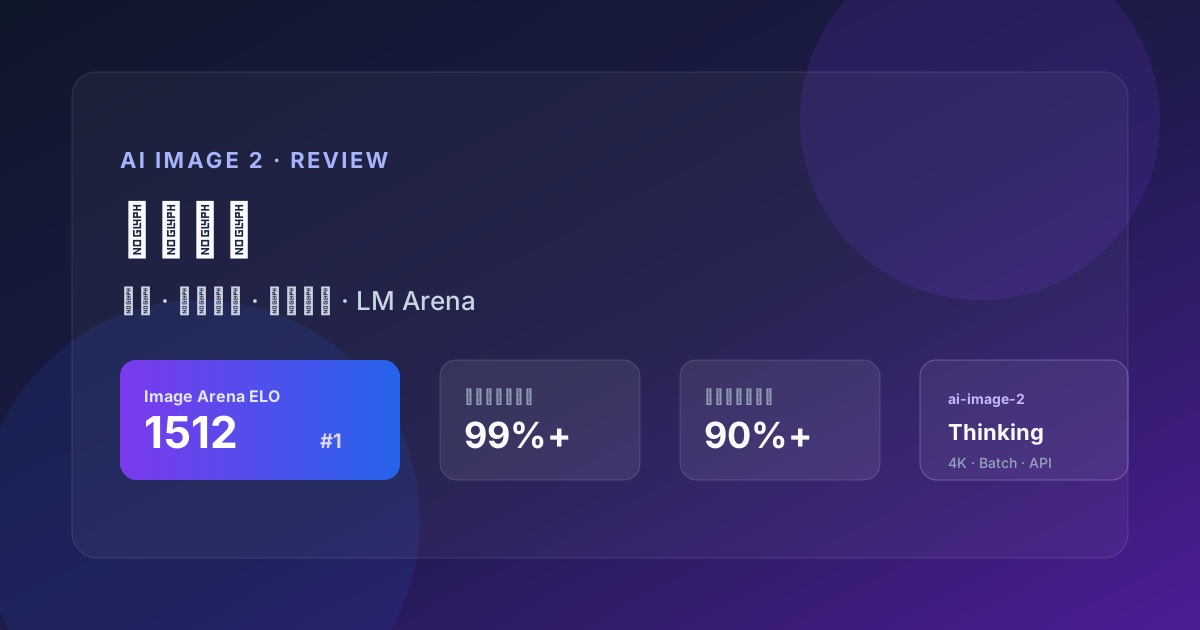
On April 21, 2026, OpenAI launched GPT Image 2 with API id gpt-image-2. This shifts the product from “pretty pictures” to a visual system that plans, self-checks, and ships commercial assets in batches. DALL·E 2/3 retired May 12, 2026.
Architecture
GPT Image 2 integrates deeper with native multimodal AI stack — images as language, not decoration. The model reasons before rendering: layout, object counts, copy, style.
Instant vs Thinking
| Mode | Best for | Notes |
|---|---|---|
| Instant | Drafts, simple art | Lower latency |
| Thinking | Posters, infographics, series | Up to 8 coherent images |
Text rendering
- English short copy: near print quality
- CJK: ~90–95% for poster-scale lines
- Layout: hierarchy and whitespace
Tip: Quote exact strings; map regions in Thinking mode.
Resolution
Native ~2K, aspects 3:1–1:3, high tiers toward ~3840px edges.
LM Arena ~1512 Elo
Strong on instruction following and text — still A/B your real prompts.
API cost
Token billing; ~1024² examples: Low ~$0.006, Medium ~$0.053, High ~$0.211 per image (2026 guides).
When to use / avoid
Fit: copy-heavy marketing, UI mocks, e-commerce sets, storyboards.
Caveats: no native transparent PNG; legal review required.
Bottom line
Migrate sandboxes to gpt-image-2, standardize generate → proof → publish. GPT Image 2 is a semi-production line, not a toy.
Architecture in depth
DALL·E 3 kept image generation relatively separate from dialogue: you describe, the image model guesses. GPT Image 2 integrates deeper with the native multimodal AI stack — OpenAI describes images as language, not decoration: good visuals should select, arrange, and reveal like good sentences.
Community consensus: the model reasons before rendering — parsing layout constraints, object counts, copy, and style, then self-checking on complex tasks. That explains jumps in multi-panel comics, infographics, and dense layouts.
API endpoints and token billing
Model ID: gpt-image-2. Common endpoints:
POST /v1/images/generations— text to imagePOST /v1/images/edits— reference edit (input billed at high fidelity)
Billing is token-based, not flat per-image. April 2026 rate guides cite ~$30 / million output image tokens and ~$8 / million input image tokens. Illustrative 1024×1024 costs:
| Quality | ~Cost per image |
|---|---|
| Low | ~$0.006 |
| Medium | ~$0.053 |
| High | ~$0.211 |
Edit flows often cost more than pure generation because reference input tokens add up. Log size, quality, n (1–10), and retries in production.
Strong fit vs caveats
Strong fit
- Copy-heavy marketing (posters, promos, multilingual ads)
- UI / dashboard / infographic first drafts
- E-commerce heroes and lifestyle sets (Thinking + multi-image)
- Storyboards and social series
Caveats
- Transparent PNG: GPT Image 2 does not ship native alpha — matting or FLUX + cutout workflows apply.
- Extreme art exploration: for personal style over brief fidelity, pair Midjourney exploration with GPT Image 2 type lock-in.
- Legal / brand: generated people, trademarks, and news-like scenes still need human and legal review.
Recommended migration path
- Run 10–20 real business prompts in AI Chat — compare Instant vs Thinking.
- Move API sandboxes to
gpt-image-2; estimate monthly cost at medium quality. - Standardize generate → proof copy & compliance → publish — never ship unreviewed.
GPT Image 2 is not magic; it is the milestone that moves image generation from toy to semi-production line. Teams that master Thinking mode and structured prompts will outpace random “gacha” users.
Ready to create?
Jump to the App workbench and try GPT Image generation and multi-turn editing for free.
Start Creating Free →